


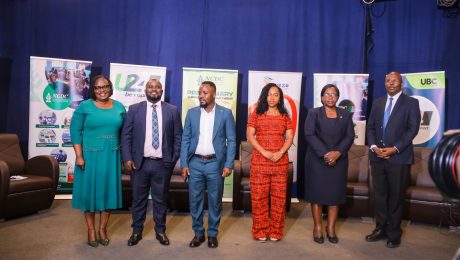
The Ministry of Education and Sports, through the National Curriculum Development Centre (NCDC), has partnered with U24 TV to promote digital learning, improve access to quality educational content and strengthen public understanding of Uganda’s Competence-Based Curriculum (CBC).
The partnership was launched on October 20, 2026, at the Uganda Broadcasting Corporation (UBC) Auditorium, in an event attended by Ministry officials and other education sector stakeholders.
Speaking at the launch, the Permanent Secretary, Ministry of Education and Sports, Dr. Kedrace Turyagyenda, said the partnership would support the Ministry’s commitment to expanding access to inclusive, quality and relevant education for all learners.
She noted that the shift to a Competence-Based Curriculum was intended to equip learners with practical skills, values and attitudes needed to contribute to national development and compete globally.
“The world is not looking for pieces of paper but rather what you can do with what you know,” Dr. Turyagyenda said.
She added that the partnership would provide a shared platform for learners and teachers across the country to access educational content, exchange innovative teaching practices and strengthen curriculum implementation.
Dr. Turyagyenda called upon all stakeholders to support the partnership, emphasising that investing in children’s learning was essential to Uganda’s future.
The Director of NCDC, Dr. Bernadette Nambi Karuhanga, said the Centre would ensure that educational content disseminated through the partnership aligns with the national curriculum and meets the required quality standards.
“As a publisher, before we publish, we make sure that what we are publishing is in alignment with the curriculum that we have developed,” she said.
Dr. Nambi Karuhanga explained that NCDC would work with relevant stakeholders to ensure that the content reaching the public is accurate, relevant and educational. She emphasised that the objective was not merely to entertain audiences, but to make learning engaging and enjoyable.
The Commissioner for Library, E-Learning and Information Technology, Dr. Patrick Muinda, said the partnership aligns with the Ministry’s Digital Agenda, which seeks to improve education service delivery through digital transformation.
He explained that working with NCDC as an authoritative source of curriculum content would improve access to reliable educational materials and promote equity by enabling learners to access learning resources more easily.
Dr. Muinda further noted that the partnership would support continuity of learning during disruptions to classroom-based education, as well as teacher development by enabling educators to observe different approaches to curriculum implementation and learn from innovations across the country.
U24 TV Station Manager Ivan Tumukunde said the station would provide a dedicated platform for educational programming aimed at improving public access to relevant information and simplifying complex education concepts.
The programmes are expected to make educational information more accessible to learners, teachers, parents and other stakeholders while increasing public awareness of the Ministry’s policies, interventions and innovations.
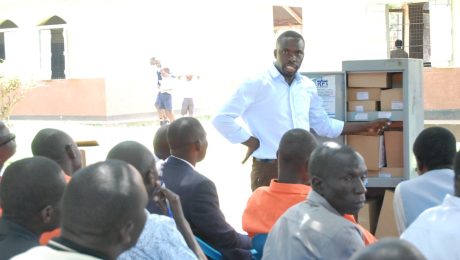
The Ministry of Education and Sports, through its partnership with River Flow International, has stepped up efforts to strengthen practical science education in primary schools with a hands-on teacher training in Tororo Municipality.
On Monday, 17th August 2026, the Ministry facilitated a specialized training at St. Kizito Primary School for science teachers from 15 Universal Primary Education (UPE) schools that recently received Primary Science Kits, commonly known as mini-laboratories.
The training, supported by River Flow International, equipped teachers with practical skills on effective use of the teaching aids to deliver engaging, interactive, and learner-centred science lessons, in line with the competency-based curriculum.
Under the Ministry’s initiative to promote hands-on learning from an early stage, learners will now move beyond theory to observe, explore, experiment and apply scientific concepts using real teaching aids.
This intervention reaffirms the Ministry’s commitment to improving the quality of science education, building teacher capacity, and laying a strong foundation for practical science and innovation from the primary level.
The Ministry appreciates River Flow International for supporting Government’s efforts to transform science education in UPE schools.
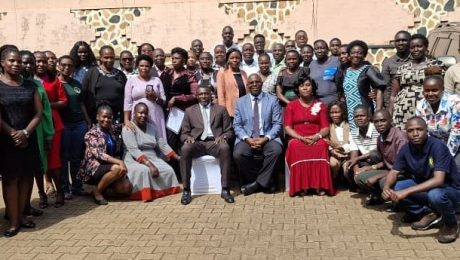
One year after the Government’s RAPEX reforms, the Ministry of Education and Sports is delivering results for Uganda’s public libraries — with a reinstated grant, new digital training for staff, and a clear mandate to transform library services nationwide.
The Ministry of Education and Sports has reinstated the Public Libraries Conditional Grant and equipped 40 public librarians, ICT officers and records officers from 20 local Governments with digital skills to modernize library services across the country.
This was revealed during the closure of a 4-day Continuous Professional Development training for public librarians held on 13th August 2026.
The training, organized by the Division of Library and Documentation Services, targeted strengthening ICT, advocacy, and social media use in public libraries.
Speaking on behalf of the Permanent Secretary, Dr. Patrick Muinda, Commissioner, Library, E-learning and ICT at MoEs, noted that following the RAPEX reforms of July 2024, the functions of the National Library of Uganda were mainstreamed under MoES. These include providing technical guidance and coordinating staff development for library and information professionals.
“MoES recognizes the crucial role that you public librarians play in advancing research, learning, and literacy,” Dr. Muinda said.
The Ministry pledged continued support to Local Governments through policy development, inspection of libraries, expansion of rural community libraries, reading campaigns, adult literacy programs, and staff training.
In a major boost, the Ministry successfully lobbied the Ministry of Finance to reinstate the Public Libraries Conditional Grant, which had been suspended. The grant has now been approved in the FY 2026/2027 budget and release is being processed.
The training attracted 40 participants from 20 Local Governments. Topics covered included library management, digitization, electronic resources, and the application of Artificial Intelligence in public libraries.
MoES however emphasized that establishing and managing public libraries remains the mandate of Local Governments, with the Ministry playing a guidance and supportive role.
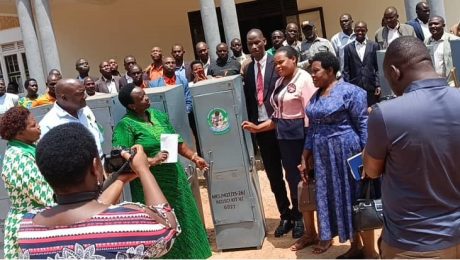
20 primary schools in Buhweju district have received Practical Science Mini-Laboratory Kits from the Ministry of Education and Sports in an ongoing exercise to equip all the 12, 433 Government aided Primary schools with science kits.
Under the Mini Laboratory Equipment (Science Kits) initiative, the Ministry of Education and Sports is distributing science kits to government primary schools in a move aimed at strengthening practical science teaching, improving academic performance, and encouraging pupils to pursue science-related subjects at higher levels of education.
The ministry handed over the kits in a ceremony led by Buhweju District Local Government. In attendance were the Chief Administrative Officer, Mr. Kalyesubula Fred; Resident District Commissioner, Madam Muhindo Pulkeria; LC V Chairman, Mr. Deo Atuhaire; Vice Chairperson, Ms. Francise Atwongyerwe; Hon. Secretary for Social Services, Ms. Florence Kasande; District Education Officer, Mr. Fred James Gabaami; SEO Special Needs; education staff; Head Teachers of the 20 beneficiary schools; SMC and PTA representatives.
District leaders noted that for years many schools have taught science theoretically due to lack of equipment.
“The introduction of these mini-laboratories will enable our pupils to conduct experiments, understand scientific concepts better, and develop interest in STEM subjects early,” said Mr. Fred James Gabaami, the DEO. The Ministry of Education and Sports says the program supports the national curriculum and government’s commitment to building a skilled, science-driven workforce. Buhweju District expressed gratitude to the Government of Uganda, through the Ministry of Education and Sports, for extending support to rural schools.
The Mini Laboratory Equipment (Science Kits) initiative is a Government of Uganda programme aimed at strengthening practical science teaching in primary schools. The Ministry of Education and Sports (MoES), through the Basic Education Department, procures and distributes portable science kits to selected government primary schools to support hands-on, learner-centred science education and stimulate early interest in STEM (Science, Technology, Engineering and Mathematics).
The programme is aligned with The Uganda Human Capital Development agenda and the National Development Plan IV.
Over the last five Financial Years since 2021/2022, the Government of Uganda has procured 3,156 Mini-Laboratory equipment (Science kits), which were distributed to 3,156 Government-aided primary schools. Each school is currently receiving one kit, the plan is to cover all the 12, 433 Government aided Primary schools and ensure all learners have access to the science kits.
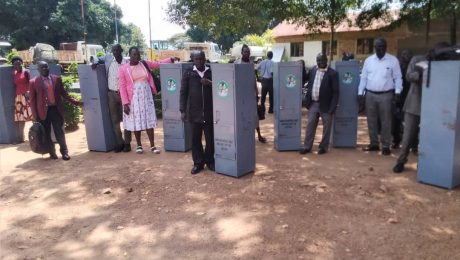
Maracha, 6th August 2026 — The Ministry of Education and Sports, through the Office of the President, the Office of the LCV Chairperson (Hon. Asea Bosco), and the Office of the Chief Administrative Officer (represented by the Principal Assistant Secretary), this morning jointly handed over Science Kits — mini laboratory equipment — to 20 selected primary schools in Maracha District.
The equipment was supplied under Phase VII of the Ministry’s program to strengthen practical science learning at the primary level in line with the Competence-Based Curriculum.
Of the 20 beneficiary schools, 15 are best-performing and 5 are least-performing. The selection criteria were designed to improve science education outcomes and promote equitable access to practical learning across the district.
Speaking during the handover, the Office of the Resident District Commissioner emphasized accountability and ownership. Headteachers were urged to ensure proper use, maintenance, and security of the equipment to prevent vandalism, theft, and misuse.
The Office of the President commended the Ministry of Education and Sports for the timely intervention, noting that it will significantly contribute to improving the quality of science education in Maracha District.
Permanent Secretary Launches Infrastructure Upgrade Project at Hoima School of Nursing and Midwifery
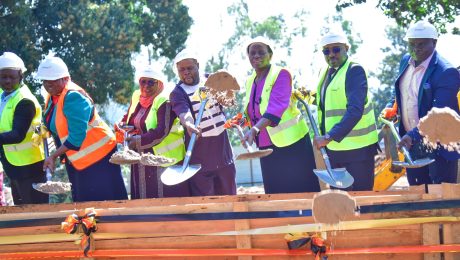
The Permanent Secretary, Ministry of Education and Sports, Dr. Kedrace R. Turyagyenda, officiated at the groundbreaking ceremony for the construction of a modern skills laboratory at Hoima School of Nursing and Midwifery under the National Health Training Institutions Project, on 30th July, 2026.
The infrastructure project, valued at €1.2 million (approximately UGX 4.9 billion), is funded by the Kingdom of Belgium in partnership with the Government of Uganda through Enabel Uganda. Construction is expected to be completed within 12 months.
The new multi-storeyed skills laboratory will provide state-of-the-art facilities to strengthen practical training for nursing and midwifery students. Once completed, the facility will enhance students’ clinical competencies by providing a modern environment where they can acquire and practice essential healthcare skills before deployment to health facilities.
Speaking during the groundbreaking ceremony, Dr. Turyagyenda reaffirmed Government’s commitment to investing in quality infrastructure that supports excellence in health professional education. She noted that improving learning facilities is essential for producing a competent, skilled and responsive health workforce capable of meeting Uganda’s growing healthcare needs.
“For the health training institution, it is purely skills development. The competences in the head have been put in the hands to allow us have a healthy population, so we are going to construct three very impressive structures in three schools for this cause,” she said.
The Hoima project forms part of a broader initiative to improve infrastructure across selected public health training institutions. Similar construction works will also be undertaken at Jinja School of Nursing and Midwifery and Fort Portal College of Health Sciences, further expanding training capacity in different regions of the country.
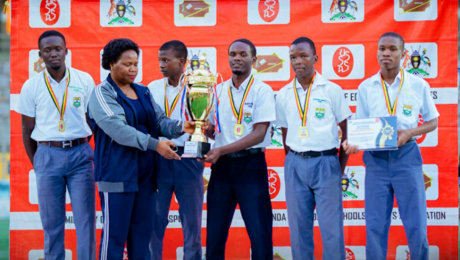

In a renewed effort to nurture Uganda’s next generation of sporting champions, the Ministry of Education and Sports, through its Physical Education and Sports Department, has doubled down on grassroots sports scouting, an initiative designed to identify, train, and elevate talent from the earliest stages of education to the national and international spotlight.
The turning point came with the rollout of the new Lower Secondary School Curriculum, which formally recognized sports as a marks gaining, skills based activity, on equal footing with other hands-on disciplines like agriculture, Robotics, ICT, and performing arts. This innovative approach reinforces the idea that sports is not just play, but a serious academic and professional pathway.
By embedding sports into learner assessment, the Ministry has engineered an ecosystem where talent identification is not incidental, but intentional. Students now participate in organized competitions that contribute to their academic performance, encouraging broader engagement and spotlighting Uganda’s untapped athletic potential.
From Primary schools to Universities, and across TVETs and Health Training institutions, the Ministry’s integrated framework ensures that talent is discovered early and systematically developed. The Uganda Primary Schools Sports Association (UPSSA) and the Uganda Secondary Schools Sports Association (USSSA) lay the foundation by imparting the basics, building discipline, and promoting competitive spirit.
Spearheaded by dedicated sports associations, this long-game approach ensures that athletes are discovered, groomed, and supported from primary school through university and beyond. The system works like a relay, with each institution picking up the baton where the last left off. At the grassroots level, athletes are equipped with fundamental skills, discipline, and sportsmanship. By the time they reach university, they are primed for advanced training, elite performance, and international competition.
One shining example of this developmental model is the Uganda Primary Schools Sports Association (UPSSA), which continues to be a cornerstone of Uganda’s sports culture. In 2024, during the International Ball Games held in Soroti, UPSSA athletes and officials planted 104 trees, a symbolic and literal investment in the future. Their action reflects how sports and environmental consciousness can work hand-in-hand to instill values beyond the pitch.
Equally pivotal is the Uganda Secondary Schools Sports Association (USSSA), whose impact resonates far beyond the classroom. In a remarkable show of innovation, USSSA led the creation of a temporary running track at Dr. Obote College, Boroboro. What began as a practical solution for competition has evolved into a resource that serves both students and the wider community. This is sports infrastructure with a heart, and a vision.
Speaking about this initiative, the First Lady and Minister of Education and Sports, Hon Janet Museveni once noted that these associations are not just feeders for elite sport but they are also guardians of Uganda’s sporting heritage and the architects of her athletic future.
The Ministry has thrown its full weight behind this movement. For the 2025 sports calendar, an impressive budget of UGX 11 billion was passed to facilitate both local and international competitions. These funds cover everything from organizing competitions to athlete welfare and infrastructure development.
But the investment goes deeper than competition. Capacity building has become a strategic pillar of this grassroots revival. Coaches, sports medical personnel, administrators, and officials are regularly trained through association-led programs to ensure that Uganda’s sports ecosystem grows holistically. This commitment ensures that young athletes are not only physically prepared, but also supported by knowledgeable, ethical, and professional personnel.
The model’s success lies in the Ministry’s ecosystem of associations that specialize in different education tiers and sports disciplines. These include:
- UGANDA PRIMARY SCHOOL SPORTS ASSOCIATION (UPSSA)
- VOCATIONAL SCHOOL SPORTS ASSOCIATION UGANDA
- TECHNICAL VOCATIONAL EDUCATION AND TRAINING INSTITUTION SPORTS ASSOCIATION OF UGANDA
- UGANDA SECONDARY SCHOOL SPORTS ASSOCIATION (USSSA)ASSOCIATION OF HEALTH TRAINING INSTITUTIONS SPORTS IN UGANDA
- INTER-COLLEGIATE TERTIARY INSTITUTIONS SPORTS ASSOCIATIONS OF UGANDA
- ASSOCIATION OF UGANDA UNIVERSITY SPORTS
- UGANDA PHYSICAL EDUCATION TEACHERS
- UGANDA PHYSICAL EDUCATION AND SPORTS SCIENCE ASSOCIATION
Together, they form a dynamic, coordinated network that champions grassroots talent and ensures continuity across all education levels.
As Uganda positions itself as a serious contender on the continental and global sports stages, this return to the grassroots is not just a strategy but a statement. A declaration that the future of Ugandan sport lies not only in stadiums and arenas, but in schoolyards, dusty fields, and the dreams of children playing their hearts out.
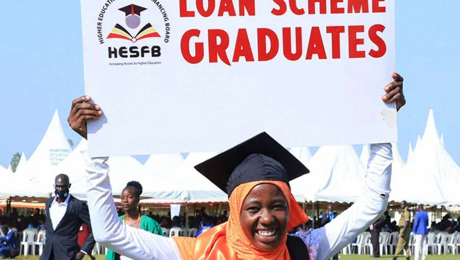
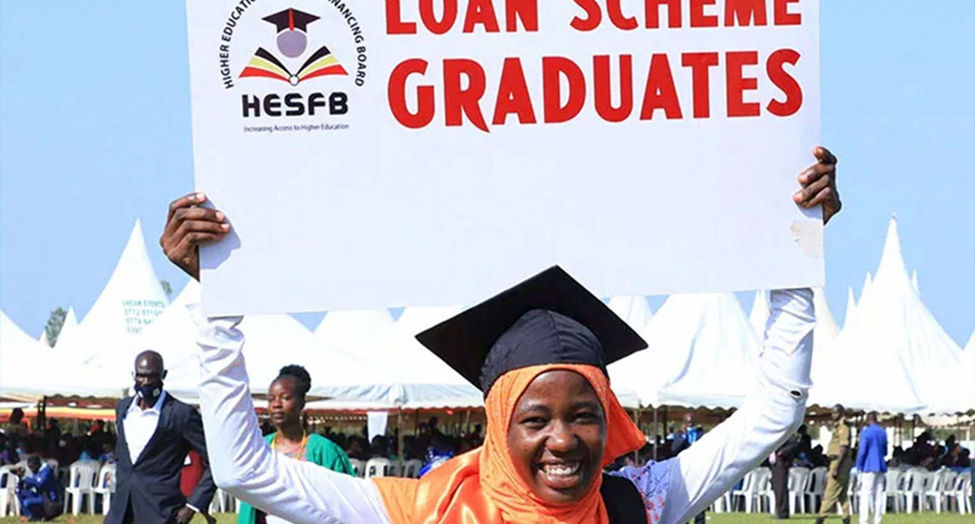
A loan beneficiary attending her graduation
The Government of Uganda, through the Ministry of Education and Sports, continues to advance equitable access to higher education through the Students’ Loan Scheme, an intervention designed to support academically qualified but financially constrained students to pursue tertiary education and contribute to national development.
Since its inception, the Scheme has emerged as a critical financing mechanism for higher education, particularly in Science, Technology, Engineering and Mathematics (STEM), while also supporting selected humanities programmes and advancing affirmative action for vulnerable groups.
The secretariat registered that between 2014 and 2024, a total of 16,014 students have benefited from the Students’ Loan Scheme across the country. Of these, 10,866 are male and 5,148 are female, demonstrating steady progress in widening access to higher education opportunities.
A total of 134 students with special needs have been supported, including 94 in science programmes and 40 in arts-related disciplines, reflecting government’s commitment to inclusive education.
The Scheme has significantly strengthened Uganda’s human capital base, with beneficiaries distributed across key priority disciplines: Engineering – 4,497 students, Science Education – 2,834 students, Human Medicine – 2,312 students, Computer Science & ICT – 1,505 students, Agricultural Sciences.
Over 80% of beneficiaries accessed the facility within the last nine years, underscoring increasing demand and growing public trust in the programme.
Hon. John Chrysostom Muyingo, Minister of State for Higher Education, noted that the number of learners qualifying for higher education has more than doubled from approximately 60,000 in the early 2000s to about 150,000 annually today. However, only about 50,000 students transition into universities and other tertiary institutions, leaving a significant financing gap that the Scheme seeks to address. Government is therefore considering expanding funding to support up to 3,000 additional students annually, in line with the approved strategic framework.
Eligibility for the Students’ Loan Scheme is guided by principles of equity, merit, and financial need. An applicant must be a Ugandan citizen, have been admitted to an accredited institution of higher learning (public university, private chartered university, or accredited tertiary institution in Uganda), be pursuing an undergraduate diploma or degree programme and demonstrate financial need.
Selection further considers district quota representation, gender balance, and socio-economic vulnerability, ensuring equitable national coverage. The Students’ Loan Scheme has enabled thousands of deserving students to access higher education. It has strengthened Uganda’s capacity in science and innovation and remains a key instrument for national development.
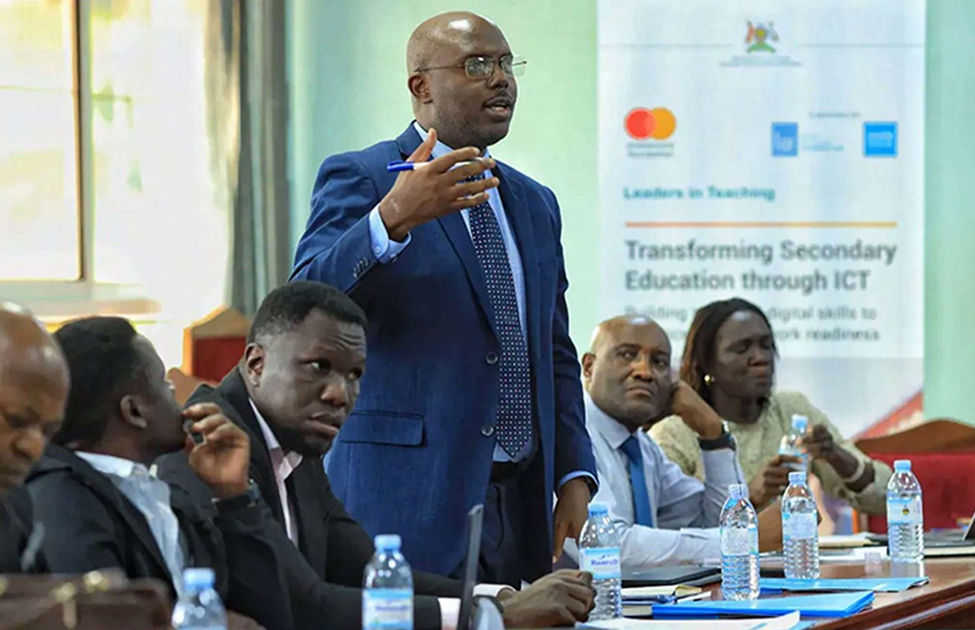
Dr. Patrick Muinda, head of the ICT department at the Ministry of Education engages stakeholders on accelerating Uganda’s digital transformation through the Digital Agenda Strategy
The Ministry of Education and Sports has taken a significant step toward transforming learning through technology following the validation of findings from a nationwide digital readiness assessment conducted in secondary schools. The validation workshop, held on 11th March 2026 in Kampala, brought together education officials, school leaders, and development partners to review evidence that will guide implementation of the Ministry’s Digital Agenda Strategy (2025-2032).
The Digital Agenda Strategy is a seven-year roadmap designed to expand access to high-quality, technology-driven education across Uganda. To support evidence-based implementation, a nationwide assessment was conducted between November 2025 and early 2026 in 3,276 secondary schools. The exercise was implemented by UNICEF and the Association of Secondary Schools Head teachers of Uganda (ASSHU), in partnership with the Ministry of Education and Sports and the MasterCard Foundation.
Participants at the validation workshop, including representatives from UNICEF, UNESCO, VVOB and ASSHU, reviewed the findings which indicate that Uganda’s education system is steadily transitioning toward digital learning. The assessment revealed that electricity — a critical requirement for digital transformation — has reached most secondary schools. However, internet connectivity remains uneven, with access in many schools limited to a single location, typically the computer laboratory. This highlights the need for expanded connectivity to support classroom-based digital learning.
Despite these gaps, the assessment established strong commitment among school leaders toward digital skills development. Nearly nine in ten respondents indicated that ICT competencies are essential for learners’ future employment and participation in the digital economy. Several schools have already begun piloting digital learning platforms, including the National Curriculum Development Centre (NCDC) e-learning system and private solutions such as Cyber School Technology. Teachers using these platforms reported more engaging lessons and improved alignment with the national curriculum.
The findings are expected to inform government planning before large-scale investments are made. The assessment examined digital skills, infrastructure, connectivity, and power availability to ensure that implementation of the Digital Agenda Strategy is grounded in evidence. The results will also feed into a broader national e-readiness assessment aimed at estimating the resources required to roll out digital learning across the country.
As part of the implementation considerations, the Ministry is exploring shared ICT hubs to enable collaboration among neighbouring schools and maximize resource utilization. In addition, officials are considering the development of national standards for ICT devices used in schools to ensure compatibility, sustainability, and ease of maintenance.
At the centre of these efforts is the Leaders in Teaching (LiT) Programme ICT Component, which supports school leaders and teachers to effectively integrate technology into teaching and learning. The programme aligns with the Ministry’s Digital Agenda Strategy and is expected to play a key role in building capacity for digital transformation across secondary schools.
The validation workshop marked an important milestone in shaping Uganda’s journey toward a digitally enabled education system, guided by data, partnerships, and a shared commitment to preparing learners for the future.
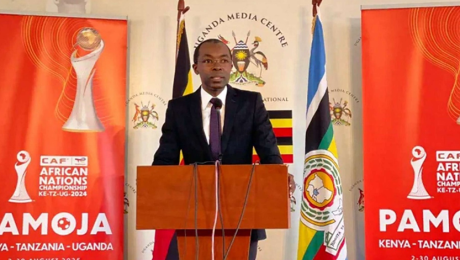
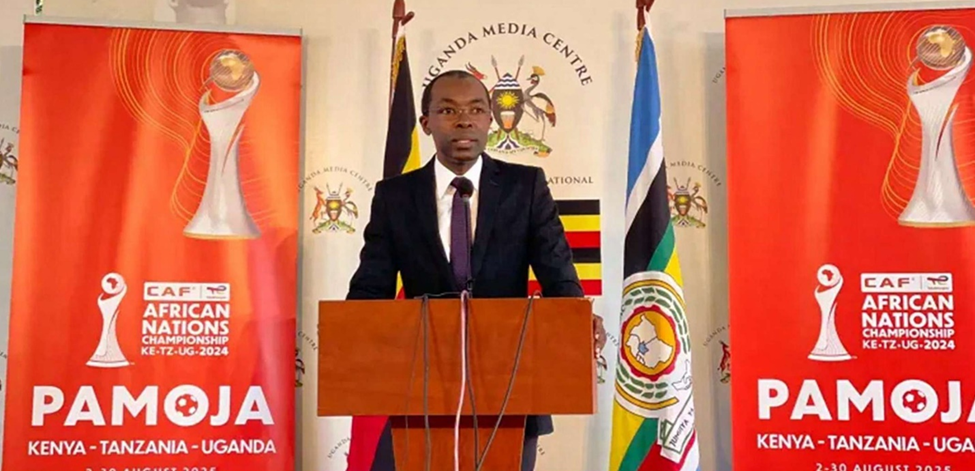
Ministry of Education and Sports Spokesperson, Dr. Denis Mugimba addressing the media at the Uganda Media Centre
The Government of the Republic of Uganda has committed significant funding to promote the country’s image as it prepares to co-host the Total Energies CAF Africa Cup of Nations (AFCON) 2027.While addressing the media at the Uganda Media Centre in Kampala, the Ministry of Education and Sports Spokesperson, Dr. Denis Mugimba, revealed that Government has prioritized financing key areas aligned to the successful hosting of the tournament in the next financial year.
Dr. Mugimba noted that this funding follows a consultative process involving various sectors, with final approval granted by Cabinet upon submission by the First Lady and Minister of Education and Sports.
He emphasised that hosting a tournament of AFCON’s scale requires coordinated effort across multiple sectors.
“Co-hosting a continental sports event of this magnitude is a complex operation that cannot be undertaken by a single sector or institution alone. It requires a whole-of-government and multi-stakeholder approach,” he stated.
As part of these efforts, Government has allocated UGX 37.85 billion specifically for marketing and promoting “Destination Uganda,” leveraging the AFCON 2027 platform to showcase the country to the world.
This campaign aims to position Uganda as a leading tourism destination in East Africa. Known as the Pearl of Africa, Uganda offers unique attractions including mountain gorilla trekking in Bwindi Impenetrable National Park, diverse wildlife experiences across ten national parks such as Queen Elizabeth and Murchison Falls, and adventure tourism along the River Nile.
The planned investments reflect Government’s commitment to not only deliver a successful tournament but also to strengthen Uganda’s global visibility, tourism potential, and long-term economic growth.
- 1
- 2